 MandAPI
DeepSeek open-sources a Super-agent prototype: architecture, setup and limits
Updated October 31, 2026. DeepSeek has published dsh-superagent-prototype, an MIT-licensed coding-agent bundle for DeepSeek Harness. It watches one GitHub repository and optionally Feishu, accepts work from authorized people, runs a dedicated task session and reports back in the original conversation, potentially with a pull request. DeepSeek calls it a research prototype, not an official product or production-ready software.
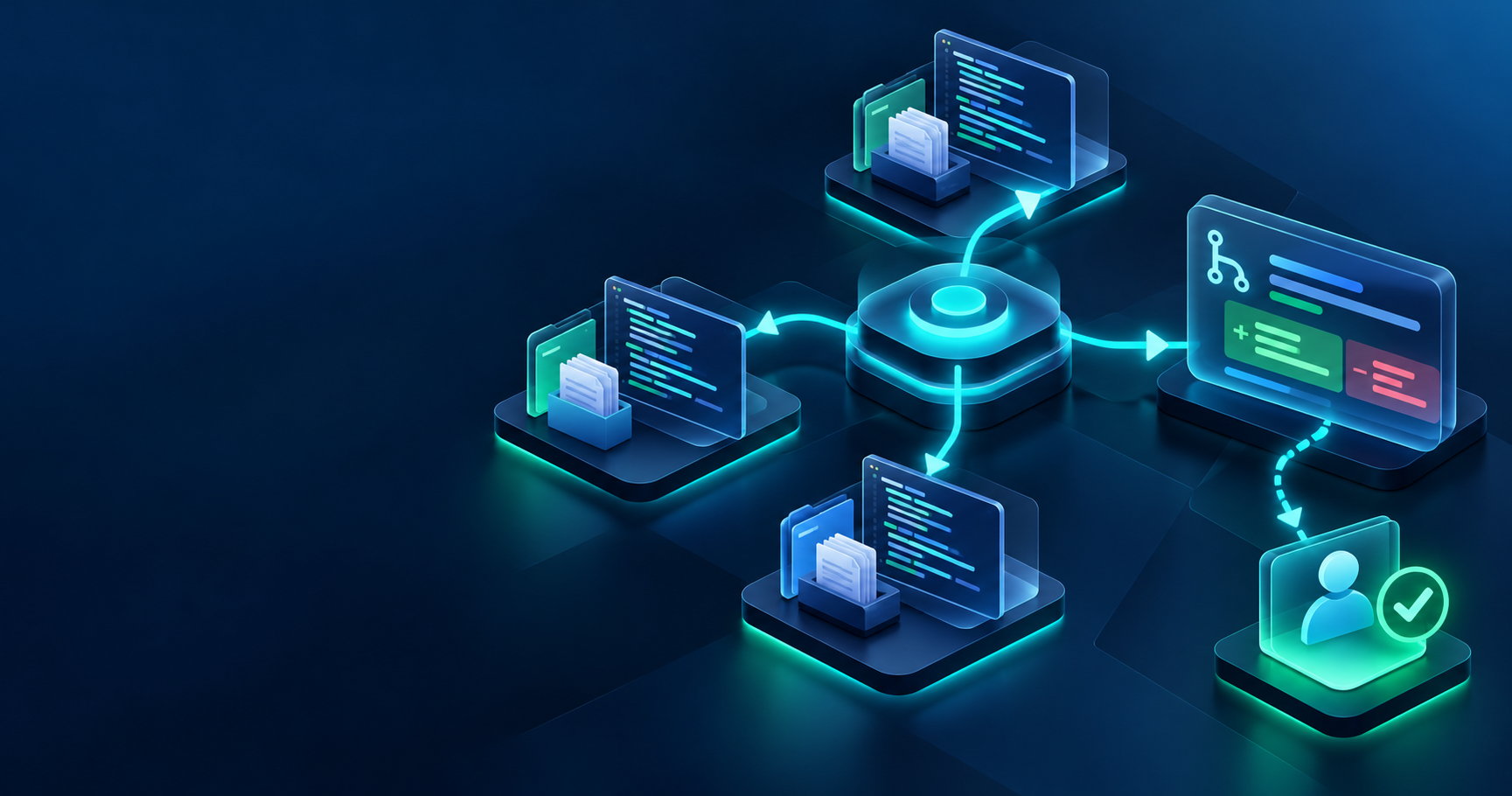
Editorial illustration made for this article; it is not a screenshot of a DeepSeek product.
What does DeepSeek's Super-agent actually do?
The useful idea is continuity. A coding task can receive follow-up comments without a person rebuilding its context in a fresh chat. A central session decides whether incoming events warrant work; an executor gets its own session and working directory. The released code is narrower than the broader “always-on personal agent” vision discussed in coverage. DeepSeek explicitly says the public prototype differs from its internal implementation and does not include every design direction mentioned in the accompanying discussion.
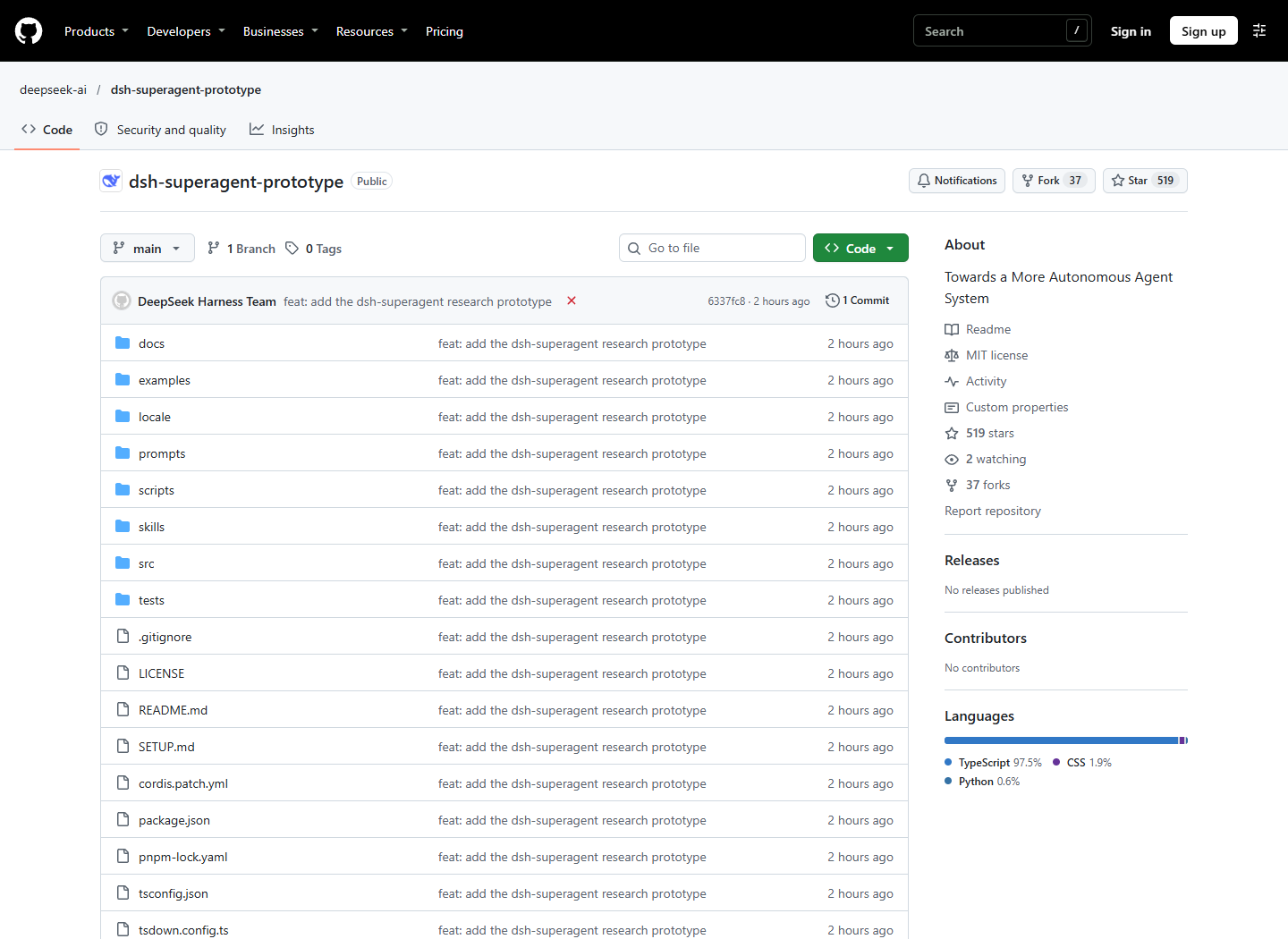
The official repository on October 31, 2026; star and commit counts may change.
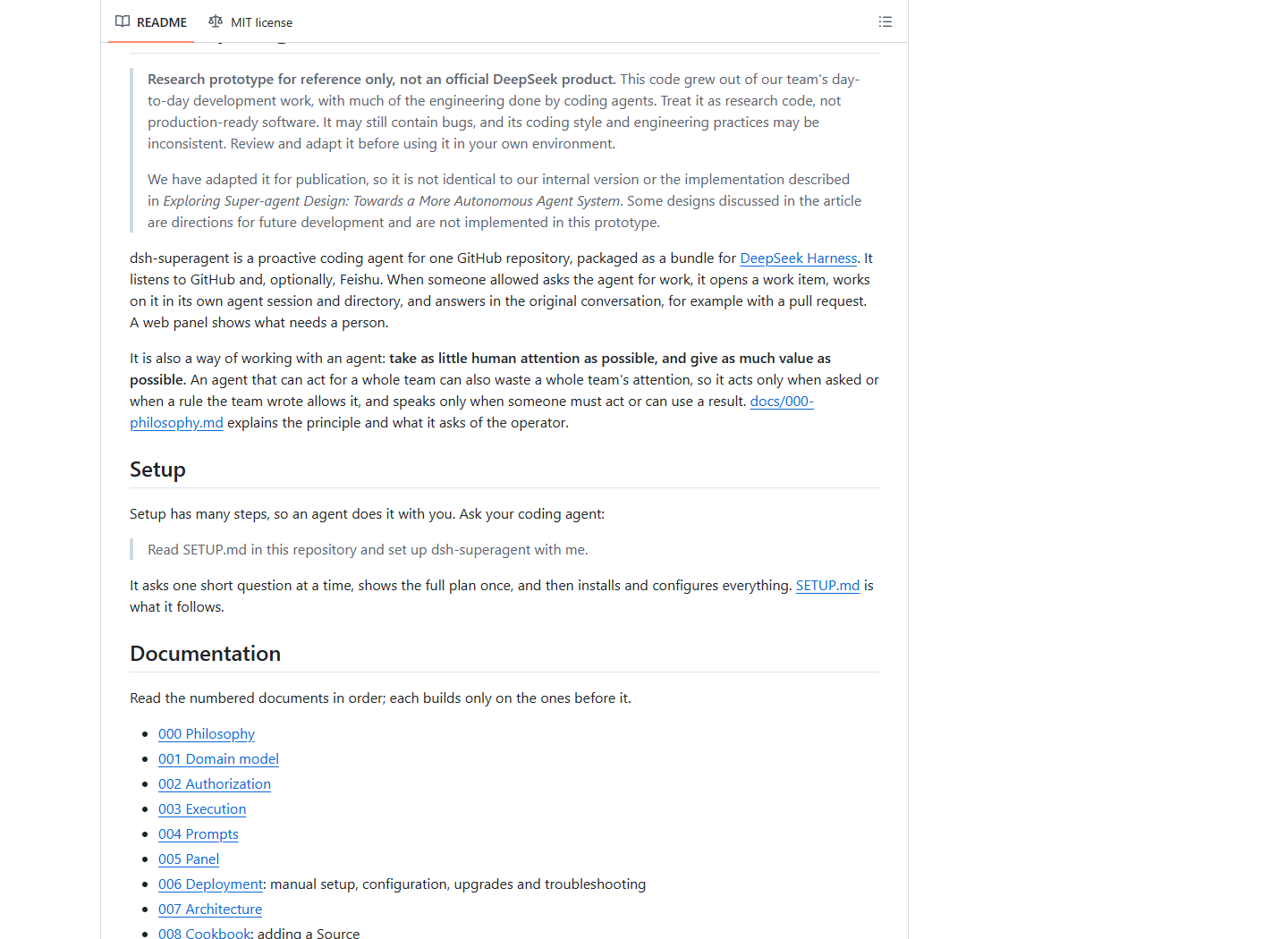
The official README distinguishes the published prototype from the internal implementation and unimplemented design directions.
How do Router, Worker and authorization fit together?
The authorization documentation describes allowed users, written rules and a task-specific permission envelope. A direct request from an allowed person can start work. Work without a direct request needs a team-written rule. GitHub comments, chat messages and quoted documents can inform a decision, but cannot grant new permissions. Each accepted task has a separate executor, while the central agent routes new events and presents decisions that require a person.
That makes the popular “the agent finds a bug and opens a PR while nobody asks” example conditional: it can happen only within the configured policy and available capabilities. It is not a blanket claim that the public code autonomously repairs arbitrary repositories.
What about the 12.4-minute benchmark?
The Chinese report supplied with this story describes an early simulation of roughly 300 messages and 20 work requests, repeated five times. It reports 12.4 minutes median and 15.7 minutes at the 95th percentile for task completion. We could not locate those measurements in the public repository's README or documentation. Treat them as reported preliminary results, not an independently reproducible benchmark or an expected service level. Real task duration varies with model choice, tools, event volume and policy.
Can developers use it today?
Yes, as a research project. The repository provides setup instructions, numbered design documentation and a development check command. Deployment requires DeepSeek Harness, a GitHub agent account with access to the selected repository and careful permission configuration. Its deployment guide says the worker runs as the operator's OS user; account wrappers select credentials but do not isolate the process. Test with a dedicated account and limited repository access.
How should you budget for an always-on coding agent?
There is no published per-task price for this prototype. Measure total model tokens, repeated event processing, tool calls and cost per completed task. Event filtering and routing may reduce unnecessary model calls, but savings depend on your workload.
For model selection, MandAPI offers a multi-provider, OpenAI-compatible API and model prices displayed in BRL. MandAPI does not sell or host DeepSeek's Super-agent prototype. Check the live catalog for available model IDs, then test whether your chosen Harness setup supports that API route. Related guides: OpenAI-compatible API and model comparison.
FAQ
Is Super-agent a new DeepSeek model?
No. This release is agent orchestration code for DeepSeek Harness, not a new model checkpoint.
Can it work without a prompt?
It can act on events under written rules configured by the team. Incoming content does not expand those rules.
Is the repository production-ready?
No. The official README warns that it is research code and may contain bugs.
Primary sources: official repository, project philosophy, authorization and deployment.